9 Things That Are 300 Feet Long Or Big
The world is filled with objects and structures so massive that imagining their true size becomes difficult. 300 feet is a measurement equal to a football field, a mid-sized skyscraper, or a towering natural giant. Many of the planet’s most impressive creations, both natural and man-made, reach this enormous scale. From ancient trees to modern engineering marvels, 300 feet appears in places you might not expect. Exploring these examples helps you visualize how huge this distance truly is in everyday life.
Here are nine astonishing things that measure around 300 feet in length or height.
How long is 300 feet?
Some of us have difficulty visualizing 300 feet in real life as it is an imperial unit. Understanding such unit allows us to know distances better. By placing measurements like 300 feet into context, we encourage our appreciation for dimensions in our daily lives.
| Unit | Equivalent |
| Meters | 91.44 m |
| Yards | 100 yd |
| Kilometers | 0.091 km |
| Miles | 0.0568 miles |
| Inches | 3,600 in |
| Centimeter | 9,144 cm |
| Millimeter | 91,440 mm |
What Does 300 Feet Look Like? Objects Big and Long
The real-life examples to show 300 feet are below:
| Category | Examples |
|---|---|
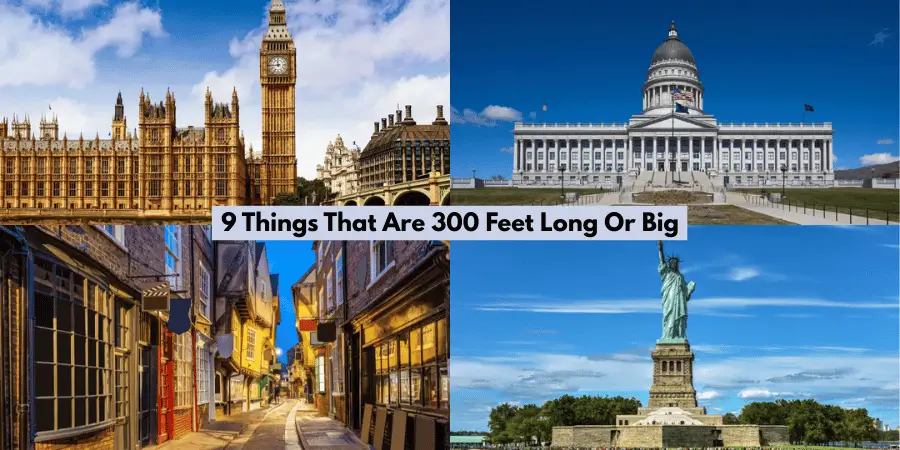
| Building and Landmarks | Big Ben The Statue of Liberty 30-Story Building Space Needle’s Mid-Height Missouri State Capitol Width ¾ Length of the Shambles ⅗ Height of the Blackpool Tower |
| Nature | Giant Sequoia Trees White Knight Tree 3 Blue Whales in a Line Volcano Lava Tubes |
| Sports | A Football Field |
| Transport | Mega-Yachts Width of 2 Airport Runways |
| Engineering Structures | Large Ferris Wheels Wind Turbine Towers Suspension Bridge Span Sections |
1. A Football Field
A standard American football field is exactly 300 feet long, making it one of the simplest ways to visualize this measurement. This field is used across all major leagues, from high school to the NFL. Its perfectly flat and rectangular layout shows how far 300 feet actually extends in a straight line. Standing at one end and looking across gives you a real sense of distance.

2. The Height of a 30-Story Building

3. Giant Sequoia Trees
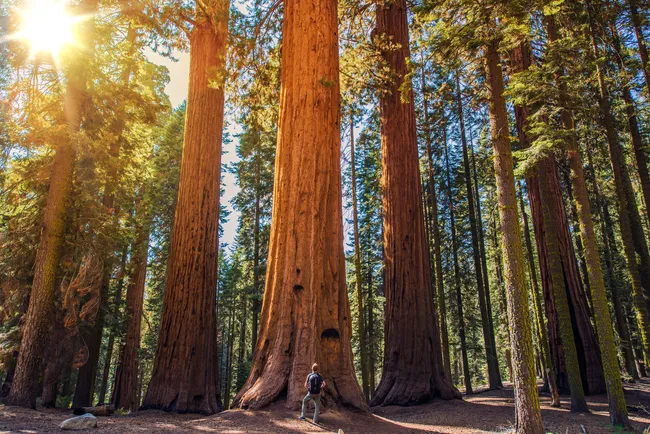
Giant Sequoias are some of the tallest and oldest trees on Earth, often reaching 275–300 feet. They can live for thousands of years, growing taller over centuries.Their massive height makes them natural wonders and symbols of longevity. Standing next to this tree feels like standing beside a living skyscraper.
4. Large Ferris Wheels
Many modern Ferris wheels have diameters close to 300 feet, making them towering amusement attractions. From the ground, their circular shape reaches as high as a 30-story building.Each rotation takes riders hundreds of feet into the air for panoramic views. The wheel’s engineering requires strong support structures to manage its massive size. These wheels show how humans use large-scale design to create memorable experiences

5. Suspension Bridge Span Sections
Modern suspension bridges are built using enormous steel sections, often about 250–300 feet long. These sections are lifted by cranes and connected high above water or land. Their massive length helps support thousands of cars crossing every day. Each span plays a crucial role in maintaining the strength and balance of the bridge. Engineers design these sections to handle weight, wind, and movement over decades. This makes the bridge spans one of the most impressive examples of 300-foot engineering.

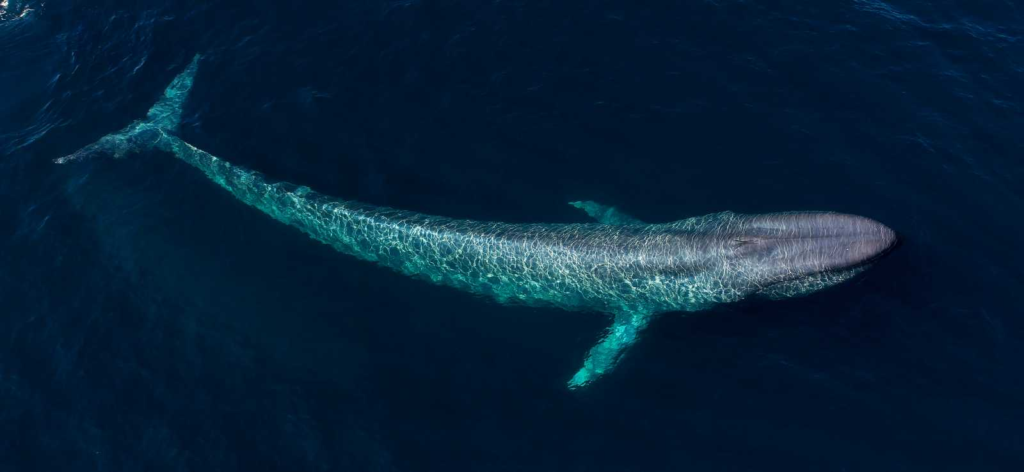
6. Blue Whales in a Line (3 Whales = 300 Feet)
A blue whale is the largest creature to ever exist. An average blue whale is roughly 100 feet, so three of them lined up equal 300 feet. This comparison shows just how gigantic the world’s largest animal really is. Seeing them lined up in your imagination gives a fun way to measure 300 feet. Whales at this scale are longer than many buildings and machines. This makes the blue whale comparison one of the most surprising examples on the list.
7. Mega-Yachts
Luxury mega-yachts often measure between 280–300 feet in length. They contain multiple decks, pools, entertainment areas, and private suites.Their size makes them feel like floating hotels or small cruise ships. Only billionaires and ultra-rich owners typically operate yachts this large. These vessels prove that 300 feet can hold unbelievable luxury.

8. Wind Turbine Towers
Modern wind turbine towers alone can reach 260–300 feet tall before the blades are added. With blades, they can stretch hundreds of feet even higher into the sky. These structures convert strong winds into clean energy for thousands of homes. Their height helps them catch more wind and improve efficiency.

9. Volcano Lava Tubes
Lava tubes form when flowing lava cools on the outside but keeps moving inside. Some of these tunnels naturally reach 300 feet in length. Walking through them feels like exploring a natural underground hallway. These caves hold geological history from ancient volcanic eruptions. Their long, dark, perfectly curved shapes represent a natural 300-foot structure.

How Long is 300 Feet to Walk?
Walking 300 feet might seem like a hard task, but breaking it down makes it look easier. At an average speed of 3 miles/hr (approx. 4.4 ft/sec), you’d complete that distance in 68 seconds. This duration feels long if you’re walking slowly through a park. Yet, in a busy urban environment, that same distance finishes quickly. A short list of speed and time is as follows:
| Walking Speed | Feet per Second | Time to Walk 300 ft | Time in Minutes |
| 2 mph (slow walk) | 2.9 ft/s | ~103 seconds | ~1 min 43 sec |
| 3 mph (average walk) | 4.4 ft/s | ~68 seconds | ~1 min 8 sec |
| 3.5 mph (brisk walk) | 5.1 ft/s | ~59 seconds | ~59 sec |
| 4 mph (fast walk) | 5.9 ft/s | ~51 seconds | ~51 sec |
| 5 mph (very fast walk) | 7.3 ft/s | ~41 seconds | ~41 sec |
Understanding the Foot
The use of feet as an imperial unit (US customary) has a historical and cultural significance. Starting from ancient civilizations, the foot has been a standardized measure since the Romans utilized it for public construction and land division.
Today the international metric unit system is being used which offers precision. The foot, however, allows ease, especially in countries where imperial units are highly important.
Metric vs. Imperial Systems
While the Metric system, founded on decimal-based logic, helps quick conversions and calculations. Countries like the U.S. stick to the Imperial system, a choice rooted in tradition, which can complex simple tasks — like measuring a room — into exercises in conversion and confusion. Common Metric units for length are:
- Kilometers (km)
- Meters (m)
- Centimeters (cm)
Imperial units for length are:
- Inches (in)
- Feet (ft)
- Yards (yd)
- Miles (mi)
FAQs
Q1. How long is 300 feet in meters?
A: 300 feet is equal to 91.44 meters. This makes it approximately the height of Big Ben.
Q2. Is 300 feet the length of a football field?
A: No, the length of a football field is actually 120 yards long or 360 feet, including the end zones.
Q3. How many cars are in 300 feet?
A: If we consider the average length of a car to be 15 feet, then 300 feet would allow approximately 20 cars lined up in a row.
Q4. How big is a room that is 300 feet?
A: A room measuring 15 feet by 20 feet offers a balanced layout for cozy spaces. In contrast, a narrow plan of 10 feet by 30 feet creates area for a gallery or corridor.
Q5. How tall is 300 feet in stories?
A: One story is around 10 feet high, meaning that 300 feet would equate to approximately 30 stories.
Conclusion
Three hundred feet is an impressive measurement, equal to the size of a skyscraper, a giant tree, a powerful wind turbine, or even several blue whales lined up. These examples show just how massive 300 feet really is and how many incredible natural and man-made structures match this scale. Understanding these comparisons makes it easier to visualize the true size of 300 feet in the real world.