10 Things That Are 40 Feet Long or Big
Did you know that while a blue whale can grow up to 100 feet long, many things in our everyday world measure an impressive 40 feet? This article explores ten fascinating objects, animals, and structures that reach this length. From large vehicles to natural wonders, 40 feet is a size that feels both powerful and relatable. Understanding this measurement helps us better visualize scale in daily life. You’ll discover how common yet striking this length can be in different contexts. These examples highlight the diversity of our environment. By the end, you’ll see 40 feet as more than just a number—it’s a meaningful part of the world around us.
How Long Is 40 Feet?
Imagine standing beside a 40-foot-long object — it’s a size that instantly shifts your sense of scale and perspective. A city bus, for example, typically measures around 40 feet, making it a familiar reference in everyday urban life. Seeing something this long up close reminds us how often we rely on common structures to understand distance, helping anchor abstract measurements in the real world.
Now think about a football field. While 40 feet is only a small portion of its total length, it can represent a decisive moment in the game — a crucial yardage that determines momentum, strategy, and opportunity. Beyond sports, this measurement appears in many practical settings, from the length of a modest boat to the width of a spacious room or a compact backyard pool. In each case, 40 feet reflects both space and function, encouraging us to consider how our environments shape movement, activity, and everyday experiences.
How Long Is 40 Feet in Other Units of Measurement?
40 feet can be visualized in other units as follows:
- 480 inches
- 13.33 yards
- 1,219.2 centimeters
- 12.192 meters
- 0.012 kilometers
- 0.0076 miles
How High is 40 Feet in the Air?
At 40 feet high, the world feels noticeably different, offering a fresh sense of scale and perspective. This height is roughly equal to a four-story building, placing you well above everyday surroundings. From here, streets, trees, and rooftops appear smaller and more connected. Architects often use this elevation for balconies and observation decks to enhance views and airflow. Standing at 40 feet can evoke both excitement and vulnerability. It reminds us how height can change not only what we see, but how we feel about our environment.
What Does 40 Feet Look Like in Real Life?
- A Standard Shipping Container
- Six Christmas Trees
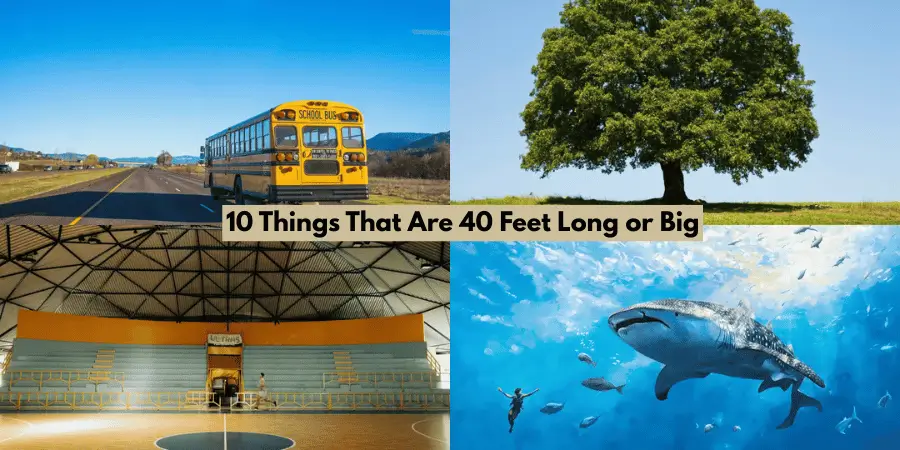
- A Standard School Bus
- A Light Pole
- A Whale Shark
- 4-Story Building
- Half the Length of a Tennis Court
- Extension Ladder
- About Half The Length of a Basketball Court
- A Red Maple and English Oak
1. A Standard Shipping Container
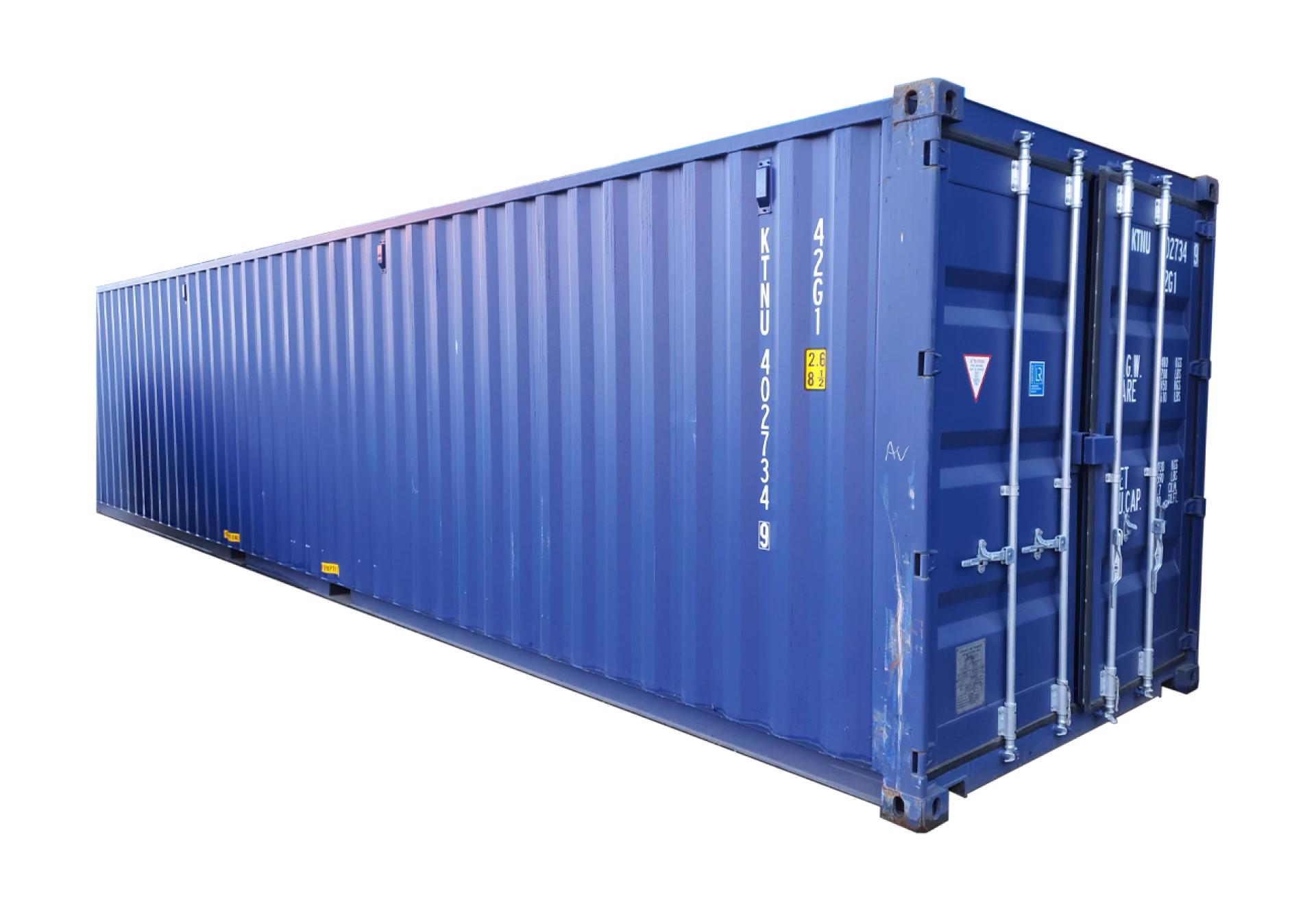
A standard shipping container may look like a simple metal box, but it plays a vital role in global trade. Its standardized design allows goods to be transported efficiently across long distances. These containers have transformed ports into major centers of international commerce. Beyond shipping, they are now widely reused in urban spaces. People convert them into homes, shops, and creative workspaces. This reuse supports sustainability by reducing waste. Overall, shipping containers represent a powerful blend of functionality and innovation.
2. Six Christmas Trees
Imagining six different Christmas trees can add charm and creativity to any home. Each tree can follow a unique theme, from minimalist designs to colorful handmade decorations. Some trees may reflect sustainability using natural materials like wood and dried fruit. Others can showcase personal interests such as books, travel, or art. These themed trees create a warm and festive atmosphere. They also encourage storytelling and family connection. Overall, multiple trees make the holiday season more meaningful and memorable.

3. A Standard School Bus
A standard school bus is more than just a yellow vehicle; it represents an important part of childhood. Its design focuses on safety, with strong structures and high-backed seats. The bus also creates a shared space where children learn social skills and responsibility. It becomes a small extension of the school environment. Modern buses now include GPS and smart tracking systems for added safety. This technology helps parents stay connected to their child’s daily journey.

4. A Light Pole
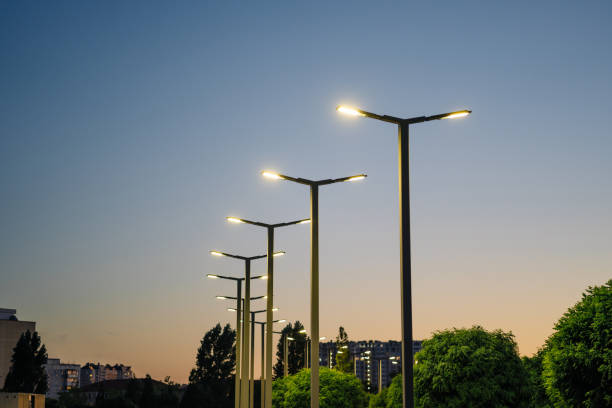
A light pole may seem simple, but it plays a vital role in everyday life. It provides safety by lighting streets and pathways after dark. Modern light poles now use smart technology to monitor traffic and the environment. In cities, they are often decorated with art that reflects local culture. In quiet areas, they offer guidance and a sense of calm. Overall, light poles combine function, technology, and community value.
5. A Whale Shark
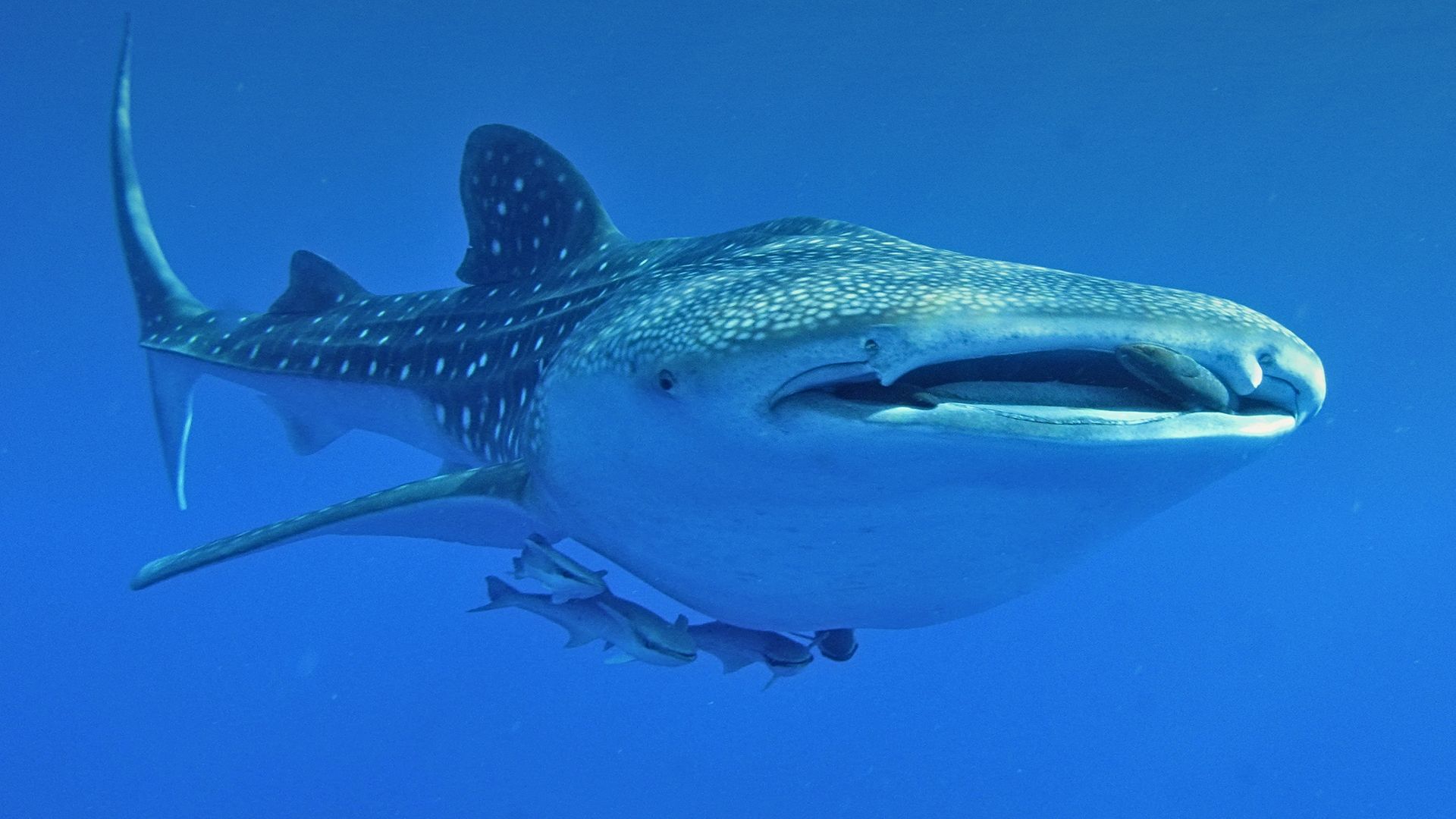
The whale shark is the largest fish in the ocean, growing up to 40 feet long. Despite its massive size, it is a gentle filter feeder that eats plankton and tiny fish. Its unique pattern of spots and stripes makes each whale shark easily recognizable. Swimming alongside a whale shark is a memorable and inspiring experience for divers. These creatures also help scientists understand ocean health through their migration patterns. Protecting whale sharks is important as climate change threatens their marine habitats.
6. 4-Story Building
A four-story building blends design, functionality, and community. It can hold homes, offices, or shops while combining modern and classic styles. Features like solar panels and rooftop gardens promote sustainability. Shared areas encourage social connections, and large windows bring in natural light. These buildings balance density with livability, offering a human-scale alternative to skyscrapers. Acting as a link between high-rises and low-rise neighborhoods, they enhance urban landscapes. In essence, four-story buildings showcase how architecture can support both people and the environment.

7. Half the Length of a Tennis Court
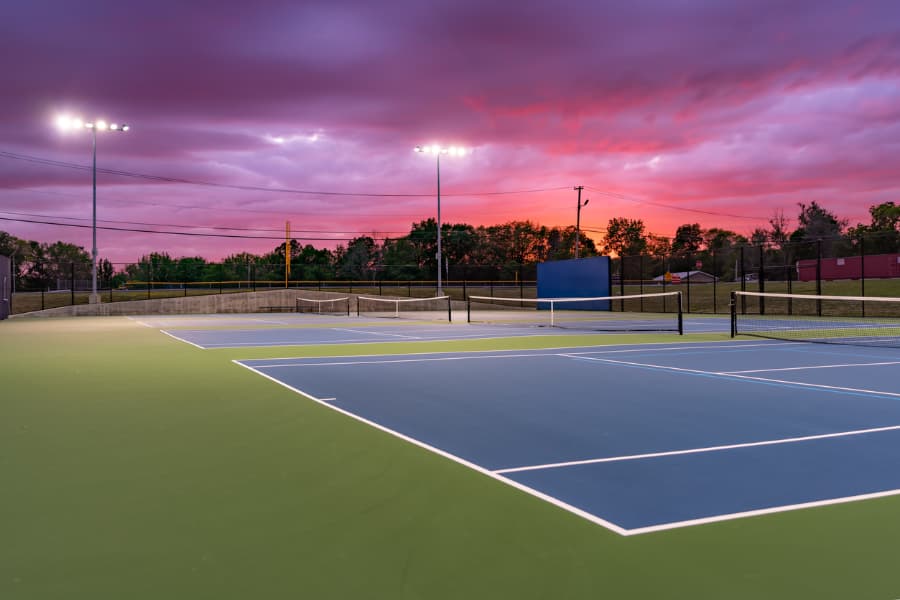
Standing at half the length of a tennis court offers a unique perspective on the game. This smaller space sharpens reflexes and emphasizes strategy, turning every shot into a test of precision. Players can practice delicate drop shots or powerful serves, experimenting with angles and placement with balls. When two balls are placed side by side, they are around 6 inches long. The condensed area distills the essence of tennis, highlighting pacing, rhythm, and skill. It’s an ideal space for learning, training, and appreciating the subtleties of the sport. Even in a smaller setting, the excitement and challenges of tennis remain vivid and engaging.
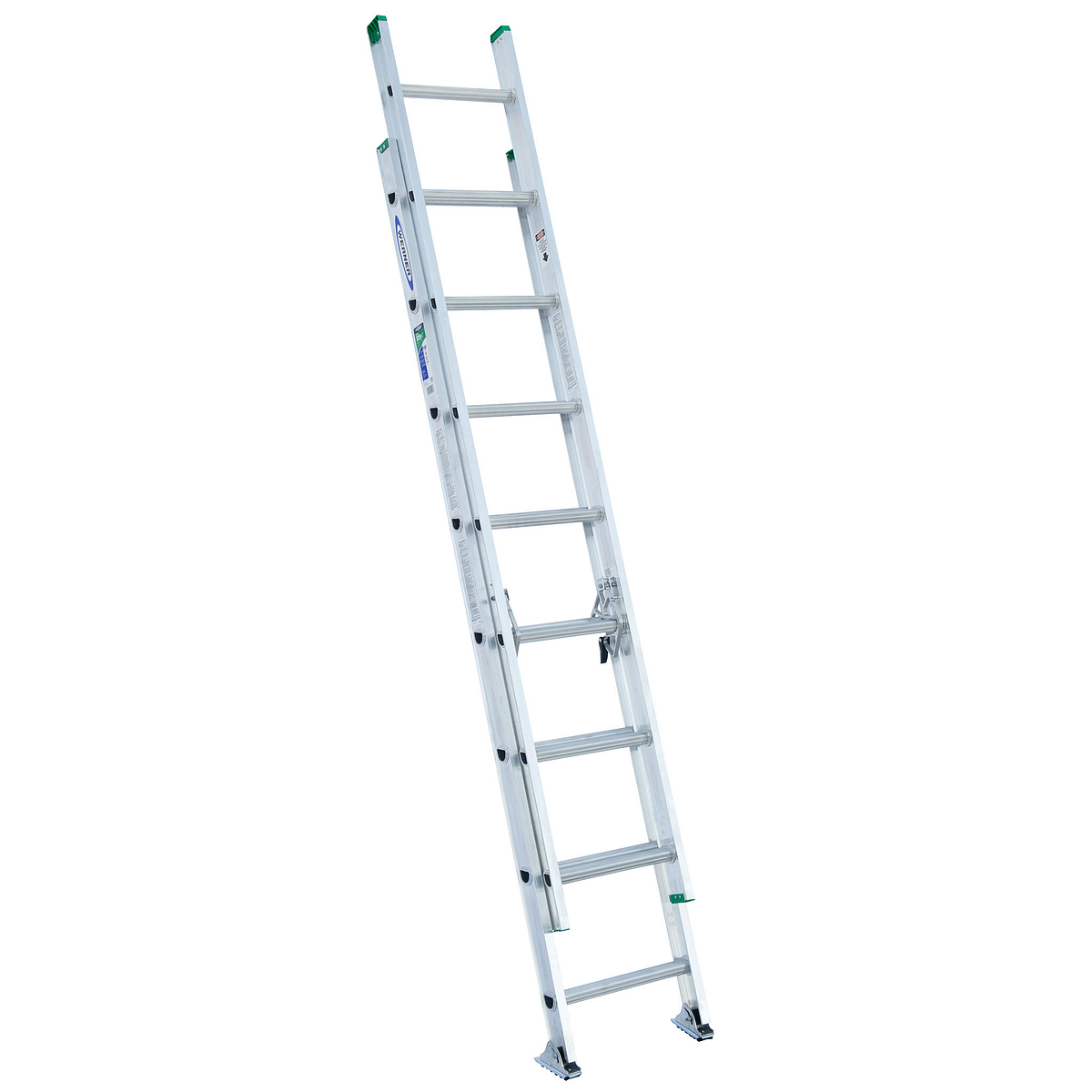
8. Extension Ladder
An extension ladder is more than a tool; it’s a symbol of reaching new heights. Its versatility allows you to access rooftops, tall trees, or other elevated spaces with ease. Modern designs prioritize safety with anti-slip feet, stabilizers, and lightweight materials, giving confidence while climbing. Beyond practicality, the ladder inspires creativity, enabling activities like painting, photography, or home projects. Each ascent becomes an opportunity to explore new perspectives. It transforms everyday tasks into empowering experiences, encouraging both physical reach and imaginative ambition.
9. Half The Length of a Basketball Court
Half a basketball court, measuring about 47 feet, is more than just a section of hardwood — it’s a hub of strategy and quick thinking. In this space, players transition rapidly between offense and defense, turning fast breaks into game-changing plays. Every pass, shot, and movement matters, highlighting the precision and agility basketball demands. Coaches and analysts study this area closely, knowing pivotal decisions here can alter the outcome of a match. It’s a microcosm where skill, speed, and teamwork converge. Despite its size, half the court holds the drama, tension, and artistry that make the game so thrilling.

10. A Red Maple and English Oak
The Red Maple and English Oak showcase nature’s contrasting beauty. The Red Maple dazzles with bright autumn foliage and fast growth, adding color to landscapes and supporting local wildlife. In contrast, the English Oak symbolizes endurance, living for centuries, and providing food and shelter to countless creatures. While the maple celebrates seasonal change, the oak embodies lasting strength. Together, they reflect the balance of transition and permanence in nature, reminding us of the diversity and harmony within our ecosystems.

Conclusion
In conclusion, objects that measure 40 feet, from majestic animals to impressive structures, reveal the incredible scale and diversity of our world. Whether it’s a giant squid gliding through the ocean or a sleek yacht cutting across the water, each example highlights nature’s wonders or human ingenuity. Appreciating these sizes gives us perspective on the vastness around us and inspires curiosity. Next time you encounter something of this magnitude, take a moment to reflect on its significance and marvel at the creativity and power it represents.
FAQs
Q1. What is something that is 40 feet tall?
A: A towering redwood tree has a majestic beauty reaching upwards of 40 feet into the sky. These are ancient giants that are one of the tallest living organisms on Earth.
Q2. How tall is a 40 ft building?
A: A 40-foot building stands as a 4-storey structure, each floor of 10 feet in height.
Q3. How many meters is 40 feet long?
A: 40 feet translates to approximately 12.192 meters.
Q4. How far is 40 feet to walk?
A: In only a few seconds (4-5 seconds), you can cover this distance, which is roughly the length of an average classroom.
Q5. How many steps is 40 feet?
A: On average, a person’s step length is about 2.5 feet, which translates to roughly 16 to 20 steps to traverse this distance.