14 Common Things That Are 4 Inches Long
A 4-inch length may seem small, but it appears in many everyday objects we use without noticing. From pencils and kitchen tools to crafting supplies, this simple measurement is surprisingly common. Understanding 4 inches helps us visualize size, proportion, and practicality in daily life. Many familiar items are designed around this length for comfort and ease of use. Exploring these objects makes everyday measurements more relatable and interesting. By noticing such details, you gain a fresh perspective on the world around you.
How long is 4 inches?
Four inches may seem insignificant, but they play a crucial role in everyday life. It’s roughly the length of a smartphone, a cupcake’s height, or the width of an adult’s hand. This measurement is commonly used in cooking, crafting, and home projects. Understanding 4 inches helps make sizing and spacing easier to visualize. It turns abstract numbers into practical, real-life references. Once you notice it, you’ll see 4 inches everywhere around you.
4 Inches vs a Standard Ruler
Visualizing 4 inches in conjunction with a ruler can shift our perspective on scale. This small measure embodies precision essential in projects where every fraction counts, enabling crafters and DIY enthusiasts to execute tasks with accuracy.
How Big Is 4 Inches in Centimeters and Millimeters?
4 inches can be translated to other important metric and imperial units. These units and values hold great significance in measuring daily day-to-day items. 4 inches equals:
- 10.16 centimeters (cm)
- 101.6 millimeters (mm)
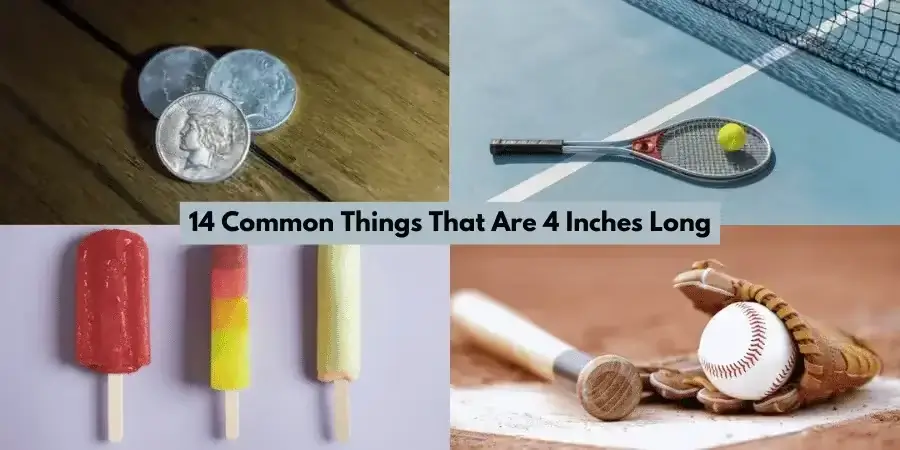
Things That Are 4 Inches Long :
- Standard Playing Card
- Two Credit Card Height
- 4 Us Quarters
- Men’s Wallet
- 4 Paper Clips
- 2 Erasers
- Hand Width
- Tennis Ball
- A Popsicle Stick
- 2 Golf Tees
- Baseball Ball
- A Toilet Paper Roll
- Half of a Standard Brick
- A Business Envelope
Household Items That Are 4 Inches Long
- Standard Playing Card – Around 3.5 inches in height.
- Two credit cards, placed side by side, measure about 4 inches.
- 4 US Quarters – Lined up, they come close to 4 inches.
- Men’s Wallet – Typically 4.25 inches tall.
- 4 Paper Clips – End to end, they measure approximately 4 inches.
- 2 Erasers – Two 2-inch erasers add up to 4 inches.
- Hand Width – The width of an average adult hand is about 4 inches.
- Toilet Paper Roll – Typically measures 4 inches in diameter.
1. Standard Playing Card
A standard deck of playing cards consists of 52 cards and carries deep historical and cultural significance. Each suit—hearts, spades, diamonds, and clubs—symbolizes different themes such as love, power, wealth, and growth. Playing cards are not limited to one game; they support countless games like poker, bridge, and solitaire that develop strategy and critical thinking. They also encourage social interaction, bringing people together across generations. Despite the rise of digital gaming, physical cards remain popular for face-to-face entertainment. Their artistic designs further add to their lasting charm and appeal.
2. Two Credit Card Height
The idea of “two credit card height” works as a simple but powerful metaphor for personal finance. It represents how thin the line can be between financial stability and overwhelming debt. Just like stacking two cards, small expenses can quickly pile up if not managed carefully. This concept encourages people to be mindful of everyday spending habits. It pushes individuals to question impulse purchases and unnecessary costs. By understanding this limit, one can make smarter budgeting decisions. Ultimately, it promotes building a stable financial future instead of risking imbalance.
3. 4 Us Quarters
The US quarter may seem like a simple coin, but it carries a rich history and cultural meaning. Featuring George Washington on one side, it represents America’s founding values. Programs like the 50 State Quarters turned it into a storytelling canvas, highlighting states, landmarks, and heritage. Later, the America the Beautiful series showcased national parks and natural wonders. These designs encourage appreciation for history, art, and the environment. Even in a digital age, the quarter remains a meaningful link to the nation’s identity.
4. Men’s Wallet
A men’s wallet is more than a functional accessory; it reflects personal style and lifestyle. The choice of material, such as leather or canvas, often shows individual taste and priorities. Minimalist wallets are increasingly popular for their slim design and everyday convenience. Sustainability has also become important, with eco-friendly materials gaining attention. Quality craftsmanship adds durability and character over time. Ultimately, a wallet becomes an extension of identity, carrying both essentials and personal values.
5. 4 Paper Clips
In a digital world, the humble paper clip remains a powerful symbol of simplicity and usefulness. Though small and often overlooked, it brings order to scattered papers and connects ideas with ease. Beyond office tasks, it can spark creativity through DIY projects and clever reuse. The paper clip also represents resilience, holding things together under pressure. It reminds us of balance in our busy lives and responsibilities. Ultimately, this tiny tool shows how small objects can make a meaningful impact.
6. 2 Erasers
Erasers, often overlooked, play an essential role in creativity and learning. The classic pink eraser encourages experimentation by allowing mistakes without fear of permanence. It helps students learn that errors are part of growth, not failure. In contrast, fabric erasers used by artists offer precision and control, refining details without smudging. These tools do more than remove marks; they enhance ideas and outcomes. Together, they remind us that imperfection is a valuable part of the creative process.
7. Hand Width
Hand width, though often overlooked, plays an important role in everyday life and communication. It affects how we grip objects, use tools, and express ourselves through gestures. In ergonomics, hand width helps shape the design of products, improving comfort and performance. It is especially important in areas like sports, technology, and music, where precision and grip matter. Cultural views also add meaning, as wider hands may symbolize strength while narrower hands suggest elegance. Overall, this simple physical trait highlights the diversity and functionality of human expression.
8. Tennis Ball
The tennis ball, a small yet essential part of the game, is carefully designed to impact play in many ways. Its rubber core and felt covering improve aerodynamics, visibility, and spin, enabling players to perform precise shots like topspins and slices. Innovations such as pressure-less balls ensure consistent bounce and durability, making them ideal for practice and casual play. Beyond its function, the tennis ball symbolizes resilience and continuity, connecting professional matches with backyard games. Each bounce reflects the energy, strategy, and joy that define the sport, making it much more than just a simple object.
9. A Popsicle Stick
The humble popsicle stick is more than just a treat accessory — it’s a tool for creativity and learning. Beyond holding ice cream, it can be used to build miniature bridges, craft models, or inspire imaginative stories, making play both fun and educational. In classrooms, popsicle sticks aid counting, problem-solving, and engineering challenges, fostering hands-on learning. Their simplicity encourages resourcefulness, showing that even the most ordinary objects can unlock creativity. With just a few sticks, children and adults alike can explore art, design, and mindfulness, turning a simple piece of wood into endless possibilities.
10. 2 Golf Tees
Golf tees may seem simple, but they play a key role in your game’s performance. Choosing between wooden and plastic tees can affect distance, accuracy, and consistency — wooden tees offer natural alignment, while plastic ones provide durability and optimized launch angles. Tee height also matters: lower tees help beginners avoid skying the ball, while higher tees allow experienced players to maximize distance. Experimenting with both type and height can reveal surprising improvements, making the golf tee not just a tool, but a personal accessory that fine-tunes your swing and overall performance.
11. Baseball Ball
Baseball, though seemingly simple, is a marvel of craftsmanship and science. Weighing about 5 ounces with a 9-inch circumference, its leather exterior and tightly wound core influence pitch speed, trajectory, and gameplay strategy. Whereas two baseballs have a length of around 6 inches. Beyond the physical, baseball carries a psychological dimension: pitchers and batters engage in a mental battle, using grip, seams, and spin to gain an edge. Players often form personal bonds with specific balls, built through practice and pivotal game moments, making each baseball not just a tool but a symbol of skill, strategy, and the emotional highs and lows of the sport.
12. A Toilet Paper Roll
The humble toilet paper roll, often overlooked, holds more significance than its everyday use suggests. Made from recycled paper, it reflects sustainability and reminds us that even small choices impact the environment. Beyond practicality, it sparks creativity — transformed into crafts, organizers, or seed starters, it becomes a tool for imagination and repurposing. This simple object connects us to innovation in sanitation while encouraging mindful living. More than comfort, the toilet paper roll embodies adaptability, resourcefulness, and the potential to turn ordinary items into meaningful, creative
13. Half of a Standard Brick
The idea of “half of a standard brick” highlights the power of simplicity in design and construction. This small unit offers versatility, allowing architects to create unique patterns and flexible spaces while maintaining structural integrity. Beyond practicality, it inspires sustainable building practices by reducing material waste and encouraging efficient use of resources. A half-brick reminds us that even tiny choices can have a big impact, showing how thoughtful design at a micro-level contributes to a larger vision in architecture and innovation.
14. A Business Envelope
In business communication, a simple envelope can speak volumes. It’s more than just a container for documents; it represents your brand and professionalism. Choices in color, size, and material can make a strong first impression, sparking curiosity and encouraging the recipient to engage with its contents. A high-quality, tactile envelope adds value that digital messages often lack, showing care and attention to detail. Custom textures or finishes can make your correspondence memorable, turning a simple mailing into an impactful statement. In a crowded market, the envelope itself becomes a tool to convey identity and leave a lasting impression.
Can You Measure 4 Inches Without a Ruler?
One effective method is using your own hand as a measuring tool; the average adult’s finger width is about an inch. By measuring out four finger widths, you can achieve a surprisingly accurate measurement.
Alternatively, consider familiar household items as your guide. Most credit cards are precisely three inches wide, so stacking one along with an index card can give you a rough estimate of four inches.
Conclusion
In summary, everyday items that measure around 4 inches highlight how this small length plays a bigger role in our lives than we often realize. From practical tools like lighters to fun items like candy bars, these objects help us visualize and connect with the spaces we inhabit. Understanding such dimensions enhances our awareness of our surroundings and the design of everyday objects. Next time you encounter something 4 inches long, take a moment to appreciate its function and presence in your routine. Exploring these measurements can spark curiosity, inspire creativity, and even lead to fun discussions about the overlooked details that shape our daily lives.
FAQs
Q1. How can I measure 4 inches without a ruler?
A: Many paperclips are 1 inch long. By laying four paperclips end-to-end, you can achieve an accurate measurement of 4 inches.
Q2. What is 4 inches comparable to?
A: A standard cupcake: many delightful desserts sit gracefully at around four inches in height.
Q3. How long is 4 inches in cm?
A: 4 inches is about 10.16 approximately.
Q4. How long is 4 inches of hair?
A: 4 inches is considered to be around the medium hair length.
Q5. How many mm is 4 inches?
A: 4 inches comprises 101.6 millimeters.